
Where Does Your Flour Actually Come From? The Case for Regional Grain Mills
Apr 14, 2026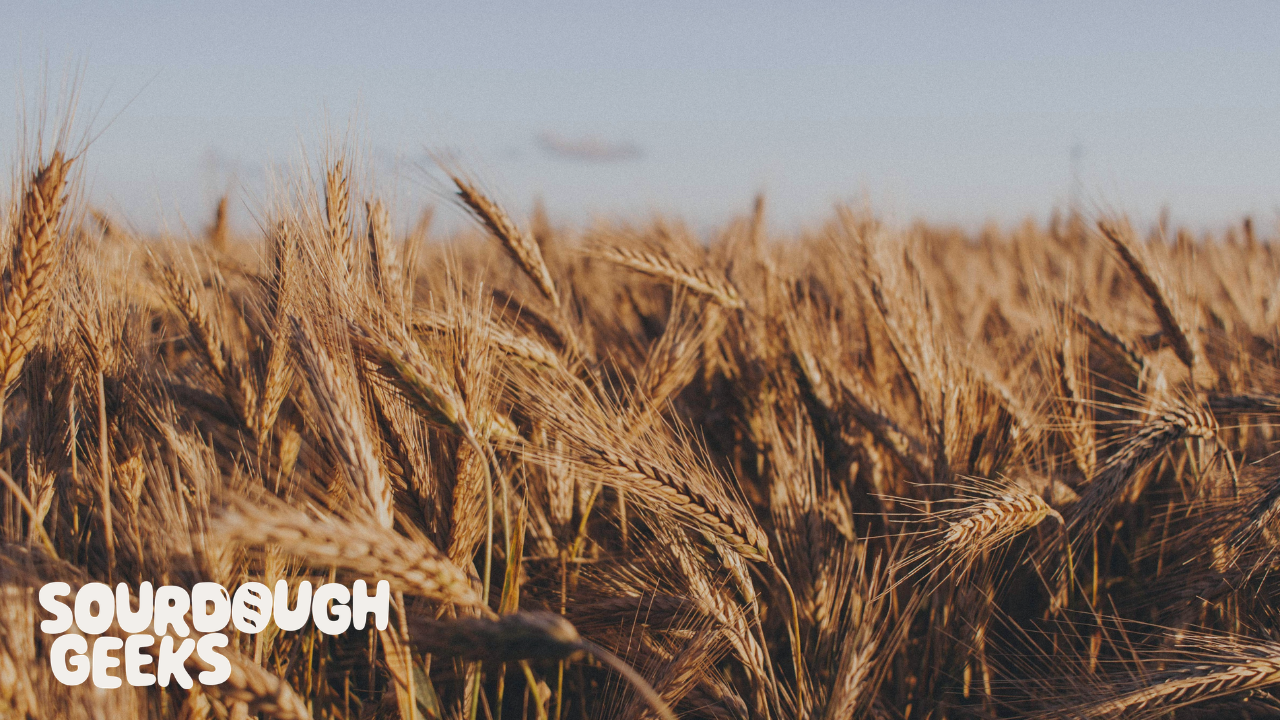
Photo by Tomasz Filipek on Unsplash
We've written before about why home-milled flour isn't all it's cracked up to be. This post is about something bigger: the farmers and millers quietly rebuilding a regional grain economy — and why every baker who takes their craft seriously should be paying attention.
A Number Worth Sitting With
The United States had over 23,000 grain mills in the 1800s. By 2019, fewer than 200 remained. Today, the twenty largest milling operations produce close to 95% of all flour in the country.
That's not just a market consolidation story. It's the story of what we lost — farmers growing regionally adapted grain varieties, millers who knew their stones and their wheat intimately, and the direct relationships between the people who grow food and the people who bake with it. Industrial milling didn't just centralize production. It severed a connection that bakers are only now beginning to realize they're missing.
The good news: it's being rebuilt. Quietly, steadily, and in more places than most bakers know.
What Industrial Milling Actually Did to Your Flour
To understand what regional millers are working toward, it helps to understand what they're working against.
Industrial roller milling is engineered for consistency and shelf stability above everything else. To get there, it strips out most of the bran, removes the germ entirely (the germ's oils would shorten shelf life), and produces a flour that behaves predictably at massive scale. Then, because so much has been removed, synthetic vitamins are added back in. Enrichment has genuinely addressed nutritional deficiencies at population scale — but it's still a workaround for what was removed in the first place.
What's also stripped out, less visibly, is identity. Commodity flour is a blend of grain from dozens of farms across multiple states, selected for protein content and nothing else. It has no origin. No variety. No story. And no flavor worth noticing.
Regional mill flour is the opposite of all of that.
The Craft of Milling (And Why It Matters to Your Bake)
Milling is a real craft — with a skill floor most bakers significantly underestimate.
A professional miller is making decisions before the grain ever touches a stone: sourcing varieties suited to their region and their customers, tempering the grain (adjusting moisture content to a precise target before milling, because how grain mills depends heavily on how it arrives), maintaining and dressing their millstones to control particle size and flour quality, and managing heat throughout — because stone milling done right runs cool and slow, preserving the oils in the germ that give whole grain flour its character and nutrition.
These aren't background variables. They're the craft itself. And they're things a home benchtop mill — however well-intentioned — simply cannot replicate.
When a skilled miller puts their name on a bag of flour, they're putting their judgment on it. Their grain sourcing relationships. Their stone management. Their understanding of what a particular wheat variety needs to become exceptional flour. That accountability is rare in a food system that spent the last century moving in the opposite direction.
The best flour you'll ever bake with almost certainly came from one of these people.
Behind Every Great Mill Is a Farmer
Behind every regional mill is at least one farmer — and often a long-term relationship built on trust and shared values.
Regional mills tend to work with growers raising grain specifically for flavor, milling character, and regional adaptation, rather than for commodity yield. Many source heritage and heirloom varieties that industrial agriculture sidelined: Red Fife, Sonora White, Turkey Red, Einkorn, Emmer, Rouge de Bordeaux. Grain selected over centuries for how it performs and how it tastes — not how much of it fits in a rail car.
Many of these farms practice regenerative agriculture: building soil biology rather than depleting it, reducing chemical inputs, sequestering carbon, and producing grain that is genuinely an expression of the land it came from. Supporting a regional mill is often — not always, but often — a vote for how grain should be grown.
And then there's terroir. It's a word borrowed from wine, but it belongs in the grain conversation too. The wheat grown in the Skagit Valley in Washington tastes different from wheat grown in the Hill Country of Texas or the limestone soils of the Tennessee Valley. That difference is real, and it's expressible in bread — if the milling preserves it and the baker is paying attention.
Commodity flour erases terroir by design. Regional mills preserve it by intention.
What It Actually Does to Your Bread
Stone-milled whole grain flour behaves differently than commodity flour in ways that are practical and measurable, not just philosophical.
The wheat germ and its oils are intact, which means your starter has more to work with — enzymes are active, fermentation is livelier, and the dough develops character you can taste. The bran is present and functional, not decorative. The flour is doing more work.
Flavor is genuinely different too. Whole grain stone-milled flour has a sweetness and depth that refined flour doesn't — because the compounds that produce those qualities are still in it. You'll notice it most in a simple loaf where the wheat has nowhere to hide.
It also handles differently. Expect more enzymatic activity, faster fermentation, and dough that's more responsive to temperature and timing. These aren't problems — they're information. They're the flour telling you something about what's in it. Once you adjust your expectations and your technique, it's hard to go back.
We Built a Directory So You Can Find Your Miller
The question we hear most often in this community is some version of: where do I actually find this flour?
The answer is: it's out there, in every region of the country, often closer than you'd expect.
We built the North American Regional Grain Mills Directory to answer that question once and for all. More than 275 stone mills, heritage grain farms, milling bakeries, and indigenous grain operations — across every US region and into Canada — organized by state, tagged by type, and searchable by specialty. Compiled from five respected source lists, it's the most comprehensive free directory of its kind available to bakers.
Heritage grain specialists. Mill-in-house bakeries that sell direct to the public. Producers working to revive indigenous grain traditions. Small farm mills that sell at regional markets and to local restaurants before anything makes it online.
The breadth of what's out there is remarkable. The regional grain economy in this country is genuinely thriving — not in spite of industrial consolidation, but as a direct response to it. People are doing extraordinary work, and most bakers have no idea how close they are to it.
Find a Regional Grain Mill near you — it's completely free to use the Directory
Why This Is Worth Your Dollars
Buying from a regional mill isn't a lifestyle choice. It's a structural decision about which food system you want to exist.
Every bag of commodity flour is a vote for consolidation — for the system that went from 23,000 mills to 200 in a century. Every bag from a regional mill is a vote for something different: for farmers growing grain with intention, for millers who've made a craft out of something the industry decided wasn't worth preserving, for a food system with traceability and accountability built in rather than engineered out.
This is what Sourdough Geeks has always been about. Not baking as a hobby to be optimized, but baking as a practice worth taking seriously — understanding the why behind the how, and making choices that connect rather than sever.
Find your miller. Learn their name. Buy their flour. Bake with it.
The North American Regional Grain Mills Directory is free and open to the entire baking community. Browse it here →
🤓 LOOKING TO LEVEL UP & BAKE BETTER BREAD? ✅
Join Sourdough Geeks' Bakers Club and unlock the good stuff! Resources, events, and connection, all within a private space. It's right there waiting for you!
