7 Powerful Questions to Ask Your Sourdough Micro-Bakery Customers
Apr 28, 2026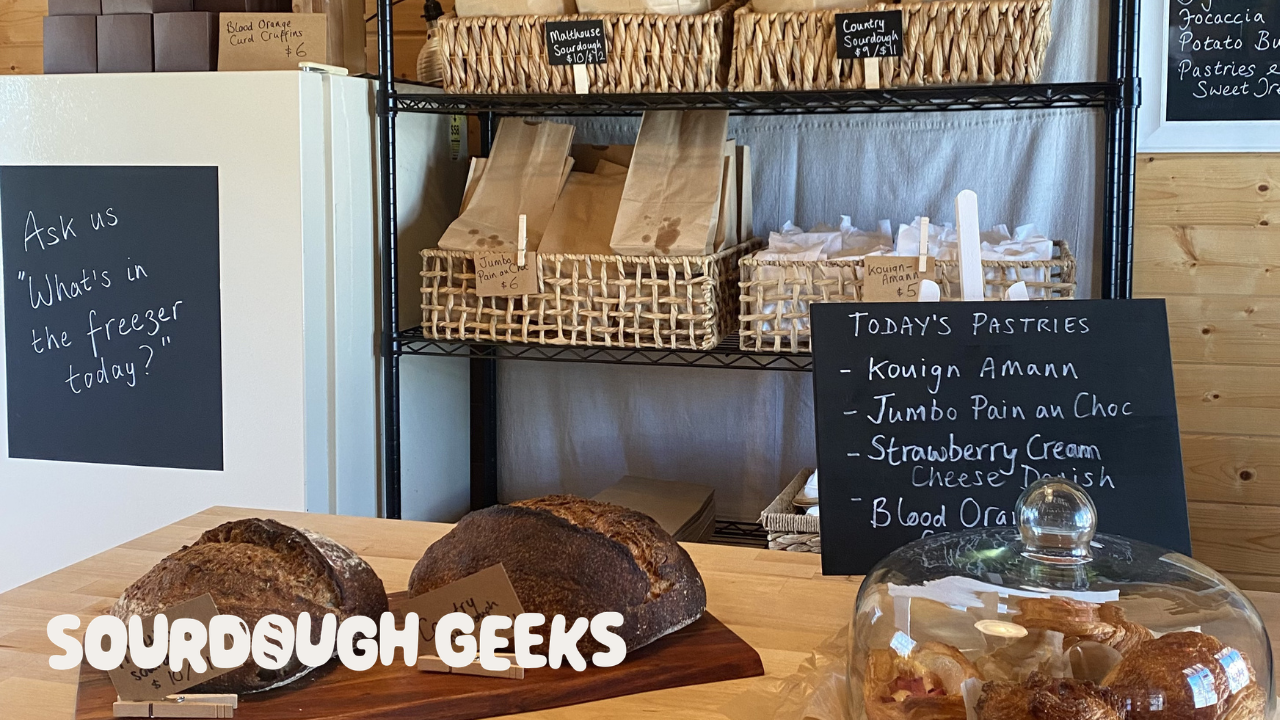
By Claire F Bridges
When James first decided he wanted to bake bread for a living, I — hey, I'm Claire, the wife — was not exactly keen. Supportive, kinda. Convinced, not yet. But by the time we committed to starting with a pop-up and seeing where it took us, I was all in.
I've never baked a loaf of sourdough in my life. What I have done is plan and run major events in a previous life as a pioneer in experiential marketing, so I brought what I could to the table: organizational obsession, a willingness to taste-test everything, and a genuine love of building customer relationships.
Just as James finds joy in helping people bake better bread, I find mine in helping people build better businesses. So in this post, I want to share seven questions I trained myself to ask in my role as shop-girl-with-an-extremely-vested-interest — questions that transformed browsers into buyers, and buyers into loyal regulars.
QUESTION 1
How do you tend to eat bread?
This is the question that opens everything up. It sounds like small talk, but it’s actually a precise diagnostic tool. The answer tells you immediately whether this person eats bread as a vehicle — for toast, for sandwiches, for mopping up sauce — or as an experience in itself, eaten warm with butter and nothing else. Those are two very different customers with two very different needs.
A customer who eats bread with every meal needs a reliable, everyday loaf — something consistent and approachable. The customer who treats bread as a ritual wants to be taken on a journey. Knowing which one you’re talking to means you can match the right loaf to the right person, rather than just recommending your bestseller and hoping for the best.
There’s also a revealing secondary layer: people who answer this question with enthusiasm are already engaged. People who shrug and say “just with butter, I suppose” are telling you they haven’t yet discovered what good bread can do. That’s not a dead end — it’s an invitation to show them.
This question also quietly signals to the customer that you’re not just selling bread. You’re interested in how it fits their life. That shift in dynamic — from transaction to conversation — is the foundation of every loyal customer relationship you’ll ever build.
QUESTION 2
What is it about sourdough that you don’t love?
Never let a reluctant customer walk away without asking this question. When someone says “I don’t really like sourdough,” most bakers nod, smile and lose a sale. The curious shop owner leans in and asks why — and in doing so, almost always discovers the real objection hiding underneath.
Nine times out of ten, the answer is something specific and fixable. Too sour. Too chewy. Too dense. The crust is hard on their teeth. They bought a loaf once that was gummy in the middle and never went back. These are not verdicts on your bread — they are clues. And each one points you toward the exact loaf in your range that would change their mind.
This question works because it reframes the conversation. Instead of you trying to persuade someone who has already decided they don’t like something, you’re now solving a problem together. That’s a very different kind of exchange — one where the customer feels heard, not sold to.
It’s also worth noting that “I don’t like sourdough” is often code for “I haven’t had great sourdough.” Once you understand that, the entire conversation changes. You’re not defending a category — you’re offering a better experience than the one they had before. That’s a pitch worth making.
QUESTION 3
What are you having for dinner?
This question was never an opener — it was a response. A customer would arrive at the counter and say "I need something for tonight," or "I've got friends coming over for lunch tomorrow," and that was the invitation. "Oh lovely — what are you having?" Suddenly you're not a market vendor, you're a friend who happens to know a lot about bread.
Sometimes it came up differently — a couple debating between two loaves, each making their case, neither quite convincing the other. That's another perfect moment for it. Or for Question 1, depending on which thread seemed more likely to untangle them. But in every case, the question arrived naturally, in response to something the customer had already said. It was never forced.
And here's what I loved about it: the customer who says "I need something for dinner" is already thinking about bread in exactly the right way. They're not grabbing a loaf at random — they're making a considered choice. They just need someone to affirm that instinct and take it one step further. "Love the way you're thinking — and if you're having X, then this one is going to be perfect." That's not a sales pitch. That's a fist bump followed by exactly the guidance they came for.
From there, the conversation practically steers itself.
- Pasta with a rich tomato sauce? They need something soft and oily that can be torn — "this Olive & Rosemary Focaccia would be perfect."
- A rich, hearty stew? Something absorbent that holds up in thick slices — "did you see this 100% wholegrain, stone-milled loaf?"
- Charcuterie graze? That calls for a mild flavor with just the right amount of stretch and chew — "our classic Country Sourdough would be my pick."
The pairing logic is almost always instinctive once you start thinking in those terms — and once your customer starts thinking that way too, their relationship with bread changes permanently.
It also creates a natural opening for add-ons — a flavored butter, a second contrasting loaf, dessert cookies! You're not upselling; you're curating. And customers who feel curated for come back to be curated for again.
QUESTION 4
Try these two, and tell me what differences you notice?
This question, and a few product samples, turns a market stall into an experience. The moment you put two pieces of bread in front of someone and ask them to compare, you’ve done something powerful: you’ve made them an active participant rather than a passive browser. And active participants buy things.
The beauty of this question is that there are no wrong answers. Whatever the customer notices — this one’s chewier, this one tastes nuttier, this crust is crispier — is the right answer, and it gives you exactly what you need to continue the conversation. You’re not testing their palate; you’re awakening it. And once someone starts tasting with intention, they become infinitely more interesting to sell to.
There's something else happening in that moment too, something easy to miss. By asking for their opinion at all, you're sending a quiet but powerful signal: your palate is worth listening to. Most people have never been invited to evaluate food with any seriousness. The moment you treat their observation — however tentative — as genuinely useful, they stand a little taller. They start to trust their own taste. And a customer who trusts their own taste starts to care about quality in a way they didn't before. You're not just making a sale; you're raising their expectations. Which sounds like a risk, but is actually the best thing you can do — because the customer with higher expectations is the one who comes looking for you specifically, rather than just picking up a loaf wherever happens to be convenient.
There's another psychological principle at work here that’s worth understanding. When people are asked to evaluate rather than simply receive, they feel ownership over the decision. They’re not being told which loaf to buy — they’re discovering which one is right for them. That distinction matters enormously, because the loaf they chose feels different from the loaf they were sold.
From a purely commercial point of view, this question almost always results in a sale. Someone who has just tasted two of your loaves and spent three minutes discussing them with you is not going to walk away empty-handed. The tasting created investment, and investment converts.
QUESTION 5
Do you prefer a darker or lighter finish to your loaf?
This question is a small act of respect. It acknowledges that the customer has a preference — even if they haven’t yet articulated it to themselves — and invites them to express it. That invitation matters more than you might think.
Most people buying bread don’t know they have an opinion on crust color until someone asks. The moment you pose the question, they start thinking about it: the darker loaves they’ve had that smelled of caramel and crackled when you pressed them; the paler ones that were softer, less assertive, more versatile. Suddenly there's a preference forming in real time, and you're the one who facilitated it.
From a flavor perspective, this question also does useful work. A darker bake means more caramelization, more complexity, slightly bolder, almost savory notes. A lighter bake is milder, more neutral, often more appealing to people who are new to sourdough or who eat bread as a background note rather than a feature. Knowing which camp your customer falls into helps you guide them towards not just a loaf they’ll enjoy, but one they’ll rave about.
And the customer who feels like you’ve listened to what they want — who leaves with the loaf that matches their specific preference — is the customer who tells people about you. Word of mouth is built on moments like this one.
QUESTION 6
Have you ever been to Europe and had a rustic or artisan loaf there?
Travel memories are extraordinarily powerful triggers for food decisions. This question reaches past the rational brain and speaks directly to nostalgia, to sensory memory, to the particular ache of wanting to recreate a moment you loved. If someone has eaten bread in France or Italy or Germany — really eaten it, in a kitchen or a village bakery or a market square — they carry that experience with them, and they’ve almost certainly never found it at home.
When a customer says yes, their face usually changes. They’ll describe something specific: a still warm traditional baguette devoured in the sunshine on the banks of the Dordogne, a seed-encrusted Brötchen (roll) filled with Schinken and Käse in a Berlin beer garden, a peasant loaf in Tuscany that they ate with olive oil and nothing else. That memory is now doing your sales work for you, because what you’re offering them is the closest thing they’ll find to it without getting on a plane.
This question also elevates the conversation about what sourdough actually is. It’s not a trend, and it’s not a health food craze — it’s a centuries-old, honest tradition that most of the world never stopped practicing. Framing your bread in that context gives it meaning beyond the transaction, and meaning drives loyalty in a way that price never can.
For customers who haven’t travelled, the question still opens a door. It invites them to imagine a different kind of bread culture, and to understand that what you’re making is part of something much bigger and older than a Saturday market stall or micro-bakery storefront. That’s a compelling story, and people buy stories as much as they buy loaves.
QUESTION 7
Ask me: what’s in the freezer today?
This is the one question on the list that isn’t really a question at all — it’s an invitation. You’re not asking the customer anything; you’re asking them to ask you something. And that’s a wonderfully subversive little move, because it immediately reframes you as a resource rather than a vendor.
In our case, the invitation was literal. We’d bootstrapped our bakery — as many of you reading this will relate to — which meant the freezer at our second (tiny satellite) unit was a gloriously battered, yellowed thing that had seen better decades. Once cleaned up, it still looked exactly like what it was: a relic. So I did what any self-respecting former marketing person would do: I blackboard-painted the front of it. Then, in large chalk lettering, I wrote:
Ask me “What’s in the freezer today?”
It became an institution. Regular customers would play along with theatrical enthusiasm — “just wondering, what’s in the freezer today?” — and I’d respond with equal ceremony: “How funny you should ask… let me tell you.” First-timers who hadn’t spotted the sign would catch on mid-exchange, the penny would drop, and everyone within earshot was in on the joke together. It cost nothing. It delighted everyone. And it had them listening attentively to the actual answer, which was, of course, the point.
And what was in the freezer? Par-baked loaves that customers could finish at home — all of the aroma, none of the effort. Rye loaves, which we only baked once or twice a month, stored carefully for the rye devotees who’d learned to ask. Focaccia in various flavors. Burger and hot-dog buns in 4 packs. We regularly sent customers away with freezer guidance notes — a little one-pager on freezing, thawing, and 'refreshing' both par-baked and fully-baked loaves, so they always knew exactly what to do when they got home. Sliced loaves, cling wrapped, and put straight into the freezer at home, can go from frozen to toasted in minutes.
The freezer solved a common hesitation: “I’m not sure we’d get through a whole loaf.” As bread-loving Brits, we never truly related, but once customers understood they could freeze without quality loss, the promise of 'fresh artisan bread on demand all week' was lodged, and any objection evaporated. Instead of doubling down, most doubled up their order. But beyond the commercial logic, what the freezer really did — what that sign really did — was turn a transaction into a performance, and a performance into a memory. And people who have a memory attached to your bakery come back to make more of them.
So yes: entertain, educate, and make it an inside joke if you can. The best retail theatre costs nothing but intention.
The Question Was Never Really About Bread
None of these questions are really about bread. They’re about connection — about making a customer feel seen, heard and genuinely considered in the few minutes you have with them. The best market traders, the best shop owners, the best small business people I’ve ever encountered all share one quality: they make you feel like you’re the only person they’re talking to. These seven questions are simply a framework for doing that consistently, even on a busy Saturday morning when you’re tired and the queue is long and the coffee hasn’t kicked in yet.
Ask the questions. Listen to the answers. Then let the bread do the rest.
🤓 LOOKING TO LEVEL UP & BAKE BETTER BREAD? ✅
Join Sourdough Geeks' Bakers Club and unlock the good stuff! Resources, events, and connection, all within a private space. It's right there waiting for you!
