
From the Woodlands of Somerset to the Tennessee Hills: Sourdough Ramp Focaccia
May 14, 2026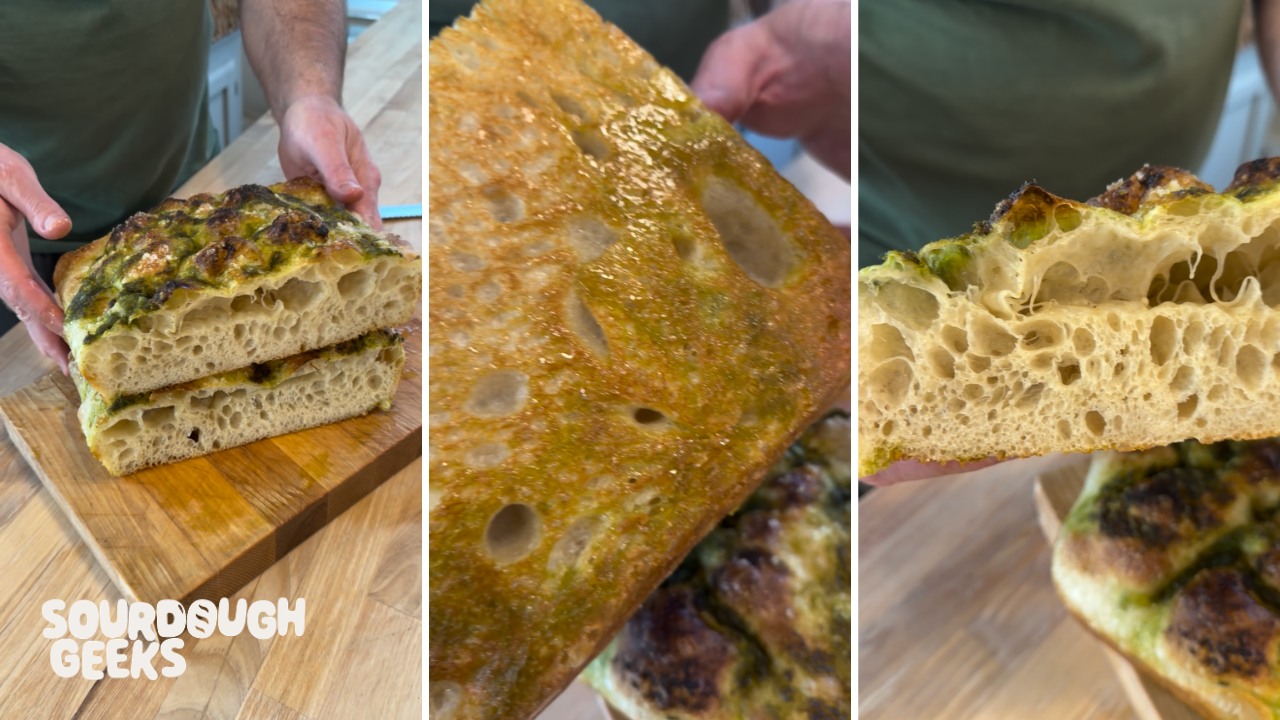
There are some ingredients that arrive on your doorstep not just as food, but as a whole rush of memory. Ramps (wild leeks) in the US, or ramsons (wild garlic) in the UK, are that ingredient for us. Aside from the obvious, they smell of early spring and damp woodland, and taste of times of yore. And every year, when they show up, we find ourselves reaching for olive oil and focaccia dough.
This post is about why that happens. It’s also about focaccia — one of the oldest breads in the world, yet now embraced by modern sourdough bakers, and how a 68-year-old community festival in celebration of that pungent, wild allium brought all of this together this year.
Focaccia: The Oldest Bread You’ve Never Stopped Making
Focaccia is somewhere between 2,000 and 2,700 years old. It is, almost certainly, older than pizza — which it more or less gave birth to. Its name comes from the Latin panis focacius, meaning 'hearth bread'. Flour, water, olive oil, salt. That was it — at least to begin with. The earliest versions, made by the Etruscans of north-central Italy and baked on hot stone or in hearth embers, were unleavened. Yeast came later, during the Roman era, and it turned out a small amount made a very good thing considerably better. But the bones of the recipe? Largely unchanged for over two thousand years.
But those Etruscans were not alone. Historians have traced similar flatbreads being made across the ancient Mediterranean world — in Greece, across the Roman Empire, and into the Middle East. Rome took it everywhere. France got fougasse. Spain got hogaza. Argentina, centuries later, got fugazza. The Romans essentially gave the world its first comfort food and then watched it evolve in every direction at once.
The version most people think of today — the thick, dimpled, olive oil-drenched slab that is Focaccia Genovese — comes from Liguria, on the northwest coast of Italy, where its local name fugassa has been in use since at least the 13th century. In Genoa, people eat it for breakfast. With a cappuccino. Which sounds like correct behavior, and should be more widely adopted.
What is it that makes focaccia so enduring? Part of it is the simplicity. It doesn’t ask much of you: a high-hydration dough that plays nice with beginners, olive oil everywhere, a hot oven, patience. It rewards generosity — more oil than you think, more salt than feels comfortable. It’s a bread that likes toppings: rosemary, onions, olives, tomatoes, cheese, anchovies. It can take almost anything you put on it and make it taste like a good idea.
The other part is that it’s forgiving. You don’t shape it so much as coax it into a pan. You don’t score it or worry about ear development. You dimple it with your fingers and drizzle it with oil and call that a technique, which it is.
Ramps: A Poor Man's Tonic, A Rich History
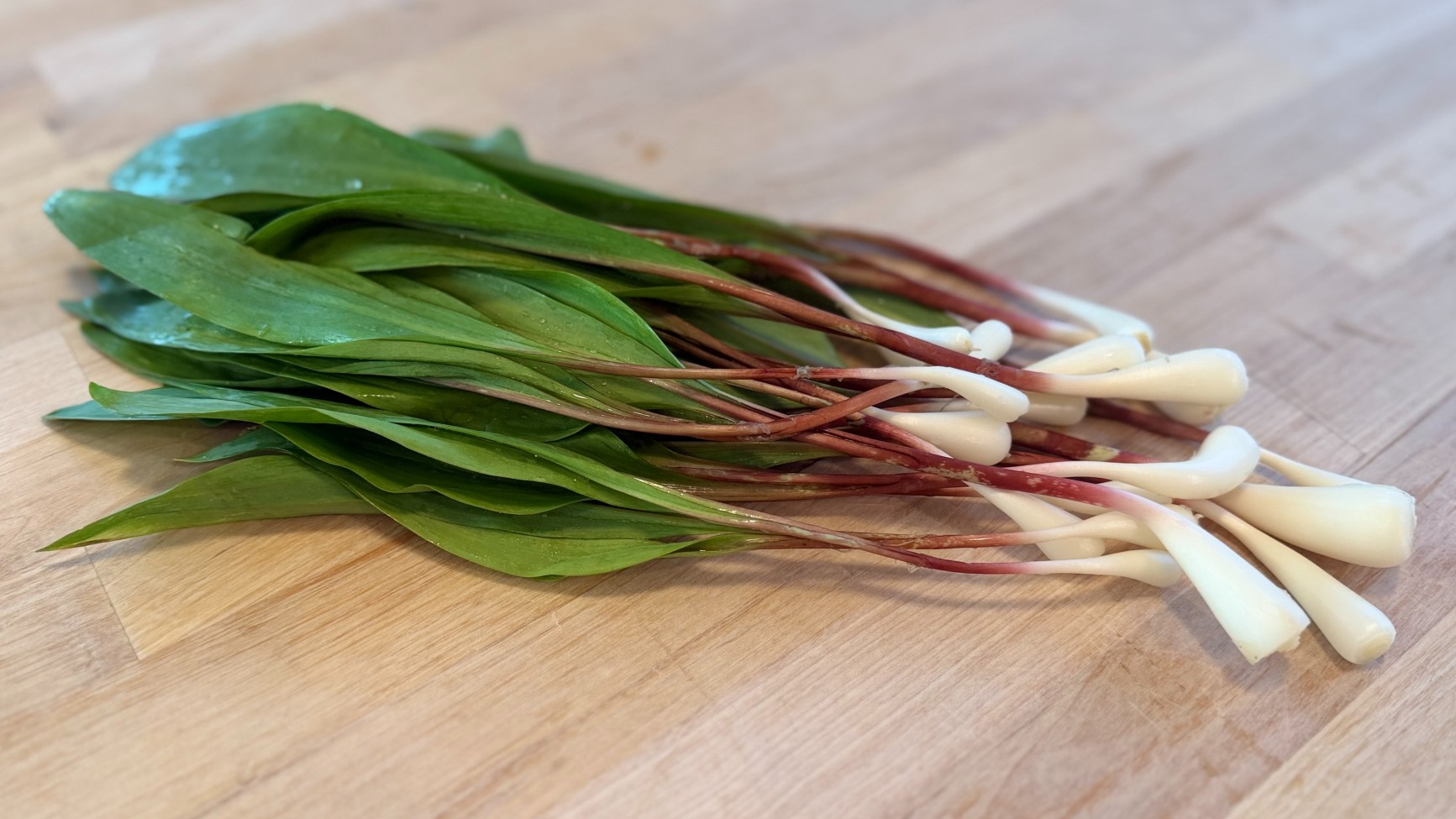
Ramps — Allium tricoccum if you want to be botanical about it — are a 'spring ephemeral' wild leek native to eastern North America. They emerge in early spring from the floor of deciduous forests, usually late March through April, and they’re gone again by late May when the tree canopy closes over them. You have a window. Miss it and you wait another year.
You could be forgiven, at first glance, for thinking you've come across lily of the valley: broad, deep green leaves pushing up through last year’s leaf litter. But that's where the similarity ends. The giveaway is the smell. Ramps carry a pungent, garlicky-onion scent that announces itself quite confidently. People describe them as somewhere between garlic and spring onion, with their own distinct character that’s hard to pin down until you've actually wandered among them, and then eaten them.
For generations, ramps were fundamental to Appalachian foodways. Indigenous communities across eastern North America had been harvesting them long before European settlers arrived, using them medicinally as well as culinarily — as a spring tonic after long winters, when ramps were often the first fresh green thing available after months of preserved food. Early Appalachian settlers absorbed this knowledge and made ramp-gathering a part of their own spring ritual.
Historically, ramps were considered poor people’s food — something you foraged because you had to, not because it was fashionable. Then, in the past two decades or so, celebrity chefs discovered them. They appeared on fine-dining menus. Farmers’ markets started selling them. Food magazines ran stories. The ramp became briefly, somewhat absurdly, a status ingredient — which created a genuine conservation problem, as over-harvesting wild populations in some areas became a real concern. The Smoky Mountain National Park banned ramp harvesting in 2002 for exactly this reason.
But long before any of that, Appalachian communities had their own ramp traditions — and some of those traditions are still very much alive.
The Ramp Tramp Festival: 68 Years Strong
Just down the road from us is Reliance, Tennessee — home of the Annual Polk County Ramp Tramp Festival.
It started in 1958, when a group of 4-H members and young farmers and homemakers from Polk and Bradley Counties decided to do something entirely sensible: they tramped up Big Frog Mountain in search of wild ramps, and when they found them, they cooked a meal right there and ate it together. The name “Ramp Tramp” is literal — a tramp through the woods for ramps. Simple as that.
The festival has now been running for 68 years. Held each April at Camp McCroy in Reliance, it's still free. The traditional meal hasn’t changed much: ramps in eggs, white beans, cornbread, fried potatoes, and country bacon, all washed down with sassafras tea — a perfect breakfast for a spring morning in the Appalachian foothills. There’s bluegrass music, heritage crafts, and the particular warmth of a community that has been gathering for the same reason for nearly seven decades.
We went this year. It wasn’t James’ birthday — that would have been too neat — but it felt like a continuation of something.
A Walk in the Somerset Woods: How We Got Here
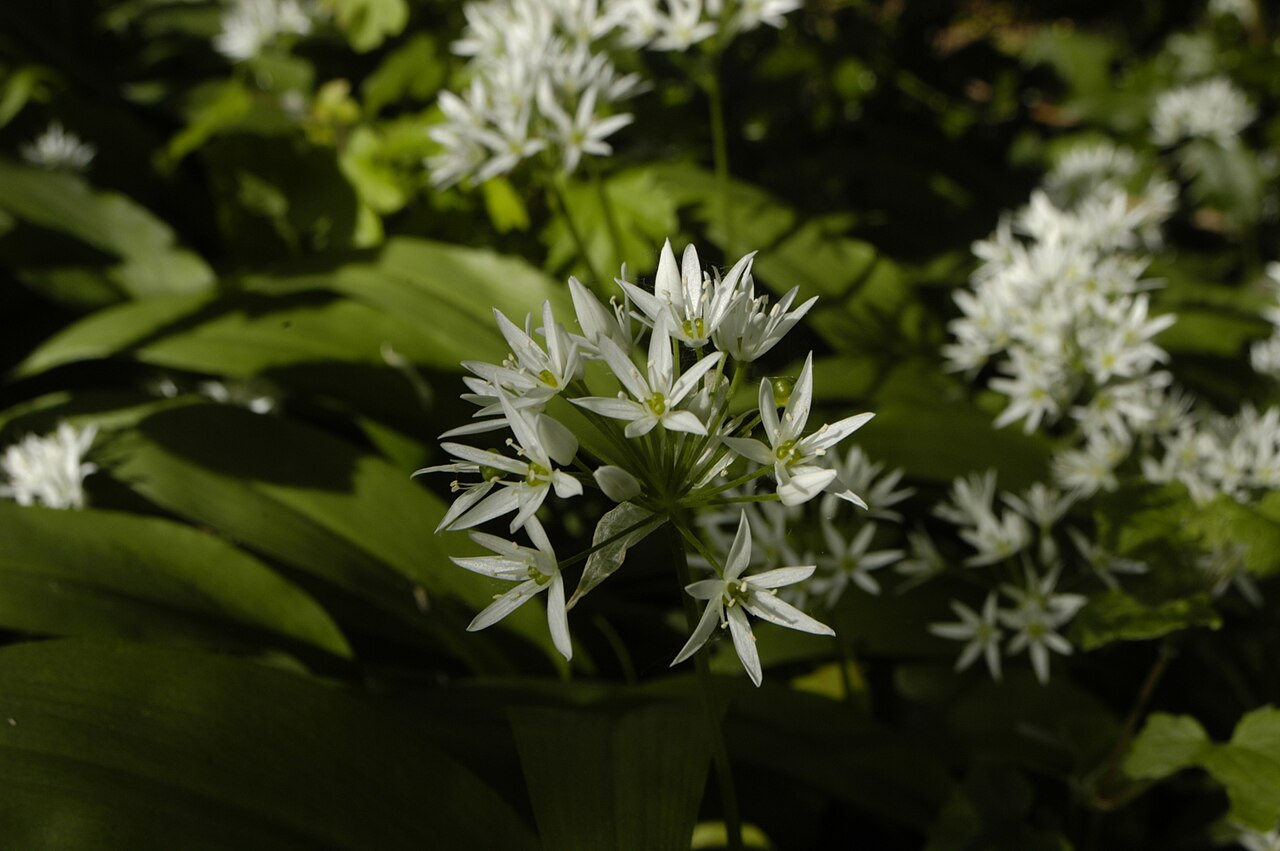
Rodolph at English Wikipedia, CC BY-SA 3.0, via Wikimedia Commons
When we lived in the UK, we foraged. It was part of how we moved through spring — going out when the season shifted, coming back with something wild and edible and deeply seasonal. Ramsons — Allium ursinum, the European cousin of the American ramp — were a fixture of that.
For James’ 40th birthday, that’s what we did. We went with a friend on a foraging hike, specifically to pick ramsons. The woods were full of them — that unmistakable garlicky scent carrying through the trees before you even saw the plants. We came back with handfuls and made pesto, which is one of the best things you can do with ramsons. And we will not be taking questions on this. (Unless you want to know why we actually called it pestarrr! — it's a pirate thing.)
Ramsons in the UK have gone through essentially the same trajectory as ramps in America. There is evidence of humans eating wild garlic in Britain going back 12,000 years; the word ramsons itself comes from the Old Saxon hramsa. Place names carry the record: Ramsbottom in Lancashire (“ramsons valley”), Ramsey in Essex (“ramsons island”). This plant has been part of the British landscape and diet for a very long time.
And yet, for most of the 20th century, ramsons were largely the preserve of foragers and people who happened to live near damp ancient woodland. They weren’t in shops. They weren’t on restaurant menus. They were a thing you knew about if you’d been taught to look, or if you happened to walk through the right woods in April, and followed your nose.
That started to change in the 2000s and accelerated through the 2010s, as food culture in the UK shifted toward seasonal, local, and foraged ingredients. Ramsons began appearing on menus at serious restaurants. Chefs started talking about them. Wild garlic pesto became a thing you could buy in a jar, which is a very reliable sign that an ingredient has completed its journey from niche to mainstream. Today, ramsons are a UK food media fixture every spring, and the broader public awareness of them has grown enormously.
It’s pretty much the same story as ramps in America, played out in a different landscape and on a slightly different timeline. Two cousins, the same genus, the same cultural arc: long eaten by those who lived in the places they grew, then “discovered,” then mainstreamed, then occasionally over-hyped, but always, underneath all of that, just a very good thing to eat in spring when almost nothing else is ready.
Coming Full Circle: The Focaccia Connection
Back in 2021, at our bakery in Kentucky, we made ramp focaccia for the first time. Sourced from a local forager, the ramps were blanched and shocked to lock in that vivid green, then blended with olive oil for a smooth, intensely fragrant, dark chartreuse emulsion. It's the same process today. Once proofed, with the top of the dough slathered in the stuff, the ombrisalli fill, creating little green ponds amongst the lunar landscape of pale dough bubbles. Or rockpools on the seashore. As it bakes, the ramp oil disperses down through the bread, giving the crispy base a green and gold hue. The result is - always was - one of the most deeply flavored focaccias either of us has ever eaten.
When we found out about the Ramp Tramp Festival — this extraordinary piece of Appalachian food culture, right down the road from our new home — we knew we’d go. And we knew that going would mean making the focaccia again. These things have a pull to them.
So that’s where this recipe comes from. It’s a full sourdough focaccia, made with freshly foraged ramps — blanched, blended, and brilliantly green. It’s a recipe that travels: from ancient Rome to the Ligurian coast to our Bristol kitchen to a Kentucky micro-bakery to your oven, by way of a 68-year-old festival and a birthday walk in the Somerset woods.
We think that’s worth making. We hope you do too.
The recipe for Ramp Sourdough Focaccia is below. If ramps aren’t available in your area, or the season has passed, a good-quality garlic confit oil makes a fine substitute — though if you ever have the chance to make it with fresh ramps, do.
🤓 LOOKING TO LEVEL UP & BAKE BETTER BREAD? ✅
Join Sourdough Geeks' Bakers Club and unlock the good stuff! Resources, events, and connection, all within a private space. It's right there waiting for you!

