
Colomba di Pasqua: Easter’s Holy Grail for Bakers
Mar 05, 2026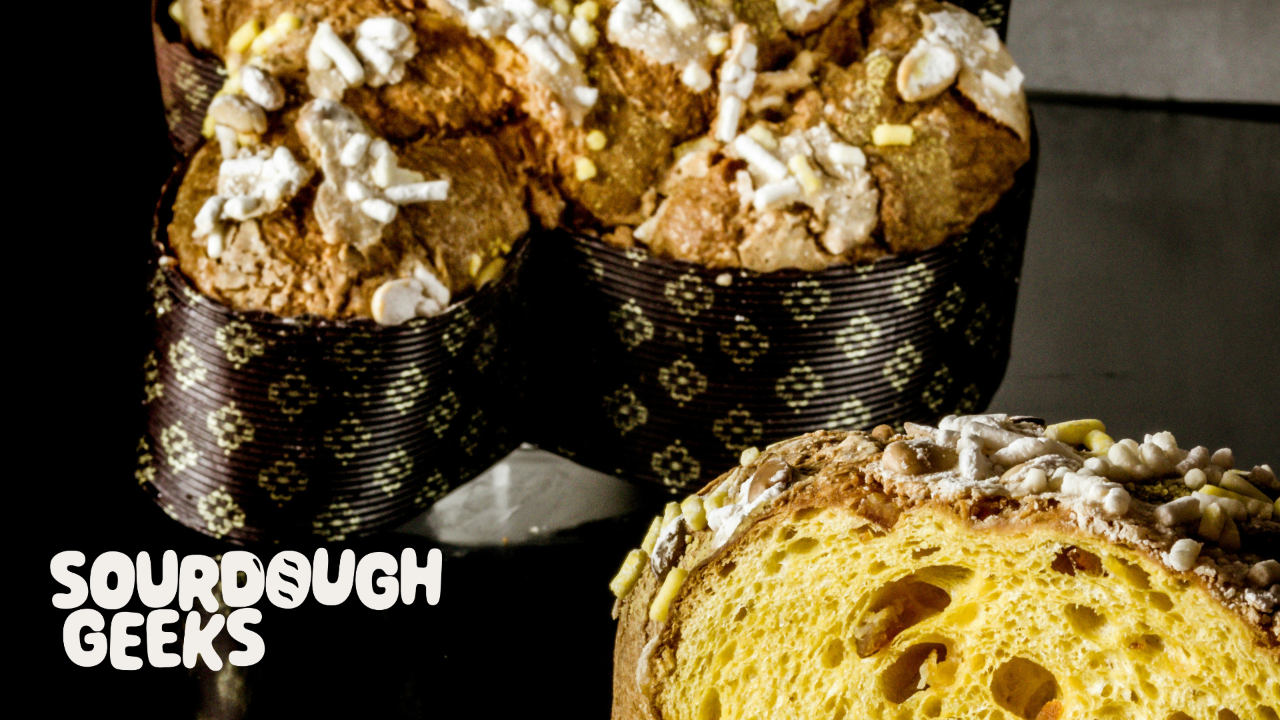
Photo by Massimo Adami on Unsplash
If panettone is the Queen of Italian Christmas breads, colomba di Pasqua is the Princess Royal.
Same DNA. Same discipline. Same humility tax.
Both are naturally leavened and heavily enriched with eggs and butter. And both demand the same persistence and patience from the baker. These are not breads you rush, neither in the making nor the mastery. They're breads you work toward — sometimes for years — and the working toward them is most of the point.
History & Tradition
Panettone—the bread colomba is based on—can be traced back hundreds of years. Helen Farrell, writer and Editor In Chief of The Florentine magazine, explains:
“The oldest and most reliable historical record of the panettone dates to 1599 in an expenditure ledger belonging to Pavia’s Borromeo College. On December 23 of that year, costs appeared for five pounds of butter, two pounds of raisins and three ounces of spices given to the baker to make 13 ‘loaves’ to be given to college students on Christmas Day.”
Colomba di Pasqua, by contrast, has a much more modern origin. Its story begins in the 1930s, following panettone’s commercial success. Milanese bakery Motta wanted to extend that success into spring. The idea was simple: take the same luxurious dough, reshape it, and give it flavors suitable for the season.
The answer was a dove-shaped loaf. Colomba means dove in Italian — peace, rebirth, all the things the season already carries. The glaze was almond and sugar, the crumb scented with citrus and vanilla. What started as clever product extension became, within a generation or two, something people genuinely remembered from childhood. That's the strange alchemy of food. It doesn't take long for a tradition to feel like it was always there.
So Colomba appears at the Easter (Pasqua) table and tends to linger there for a few days, which feels right. At breakfast with coffee. After lunch with a glass of dessert wine, or just passed around while people sit and talk. It's a bread built for slowness. For the kind of eating that doesn't really have an agenda.
Like panettone at Christmas, it's not really about getting through it quickly. It's about having it there. About the ritual of cutting another slice. About the smell of it in a warm kitchen.
Same-Same But Different
Colomba shares panettone's technical foundation. Stiff lievito madre. Long, staged fermentation. Careful, progressive gluten development in a dough so enriched it looks genuinely hopeless at the start — a sticky, refusing mass that seems like it will never come together — and then, slowly, it does.
Where colomba diverges is in its flavor. Classic colomba is citrus-forward in the way a good spring morning is; fresh, and clean, and bright. Raisins, a panettone staple, rarely feature. Heavy flavors give way to light, with candied orange or lemon zest doing most of the aromatic work, and vanilla. And then there's the glaze — a crackling crown of almond and sugar that sets in the oven and gives the finished loaf something close to drama. You've done all this quiet, patient work, and then there's this moment when it comes out of the oven and it looks like something.
Modern bakers continue to push the boundaries. Chocolate and orange, like the one we made 'to order' at the bakery. Pistachio and white chocolate. Apricot and almond. Some have gone savory — olive oil, citrus leaf. None of these are wrong, exactly, but every addition is a negotiation with the dough. Inclusions can compromise gluten structure, shift fermentation, change the whole balance of the thing. The dough doesn't care what you had in mind. It only knows what it can carry.
The shaping is its own education. Whereas panettone grows vertically, fighting gravity straight up, colomba has to be guided into its dove-shaped mold — two wings, a body, in flight. The form seems achievable until you're actually doing it, and realizing the dough has its own opinions about where it wants to go.
Why So Hard?
These doughs can exceed 160% enrichment. That's a lot of butter and eggs asking to be held together by gluten that's already working hard. The starter must be strong enough to lift all of that weight, but mild enough that acidity doesn't quietly undermine the gluten structure or flatten the flavor before anything else goes wrong. Dough temperature, mixing order, oxidation, fermentation timing — everything operates within margins that feel almost unreasonably thin.
Under-mix and it tears. Over-mix and it collapses. Ferment too fast and the crumb tightens. Too slow and the structure fails before you reach the oven. It's the kind of bake where you can do most things right and still end up with something disappointing, and you have to sit with that, figure out where it went wrong, and go again.
Roy Shvartzapel, a U.S. baker trained in the Italian tradition, has called panettone the Mount Everest of baking. Iginio Massari — widely considered Italy's greatest living pastry master — has spoken about the extreme care the process demands. Over 60 hours of staged, careful work to achieve the right balance of softness and flavour in the finished loaf. Not 60 hours of active labour, but 60 hours of tending. Of watching. Of knowing when to act and when to leave it alone.
What you're chasing, ultimately, is what Italian bakers call seta. Silk. A crumb that pulls apart in long, vertical threads — almost fibrous — that you don't get by accident, and cannot force. You get it by building gluten progressively, letting the dough rest when it needs to, emulsifying fat carefully into a network that's already strong, and then proofing right to the edge of what the structure can hold. High enough that the loaf bakes open and full. Not so far that gravity quietly wins while you're not looking.
Most failures happen long before the oven. In the starter prep usually, or in the mix, or in a final proof that went a little too long. Structure is built gradually, and small mistakes have a habit of waiting until the worst possible moment to show themselves. That's one of the harder things to learn — that what happens in the first hour matters as much as what happens in the last.
What This Means if You're A Baker
Three aphorisms keep coming up, familiar to bakers of any lean dough. But for these heavily enriched doughs, with higher stakes and tighter margins for error.
- The starter is the whole foundation. It needs to be strong enough to lift a very heavy dough and balanced enough that acidity stays under control. Too much acid and the gluten weakens, the flavour goes thin and sharp. Too little activity and the dough simply buckles under the weight of all that butter and egg. You can follow a formula precisely and still have problems if the culture isn't where it needs to be. The bread starts well before the first mix.
- Dough temperature really, really matters. Butter softens quickly in a warm mix. Fermentation accelerates in ways that compress your window. Most bakers aim to keep finished dough temperature around 26–28°C — not because that number is sacred, but because it keeps things manageable. A few degrees in either direction and the margins close fast.
- Read the dough, not the clock. The cues are always there. The way it feels under your hands, whether it's holding its shape or slowly losing it, how it smells, how it moves when you nudge the container. These tell you more than the schedule does. The schedule is a guess. The dough is the truth.
Colomba, as panettone, is a rite of passage for enriched dough bakers, but that framing makes it sound like something you finish. You don't. You just get better at noticing what it's telling you. A slightly tired starter, a small shift in the room, a judgment call about proofing that turns out to be wrong — any of it can derail a loaf you thought was going well.
That's not a flaw in the process. That is the process.
And it's also why, when you pull one out of the oven, and it's right — that glaze crackling, the crumb opening up the way it's supposed to — it feels like something worth marking.
🤓 LOOKING TO LEVEL UP & BAKE BETTER BREAD? ✅
Join Sourdough Geeks' Bakers Club and unlock the good stuff! Resources, events, and connection, all within a private space. It's right there waiting for you!
