
Steam Under Pressure: The Most Underrated Ingredient in Your Sourdough
Sep 24, 2026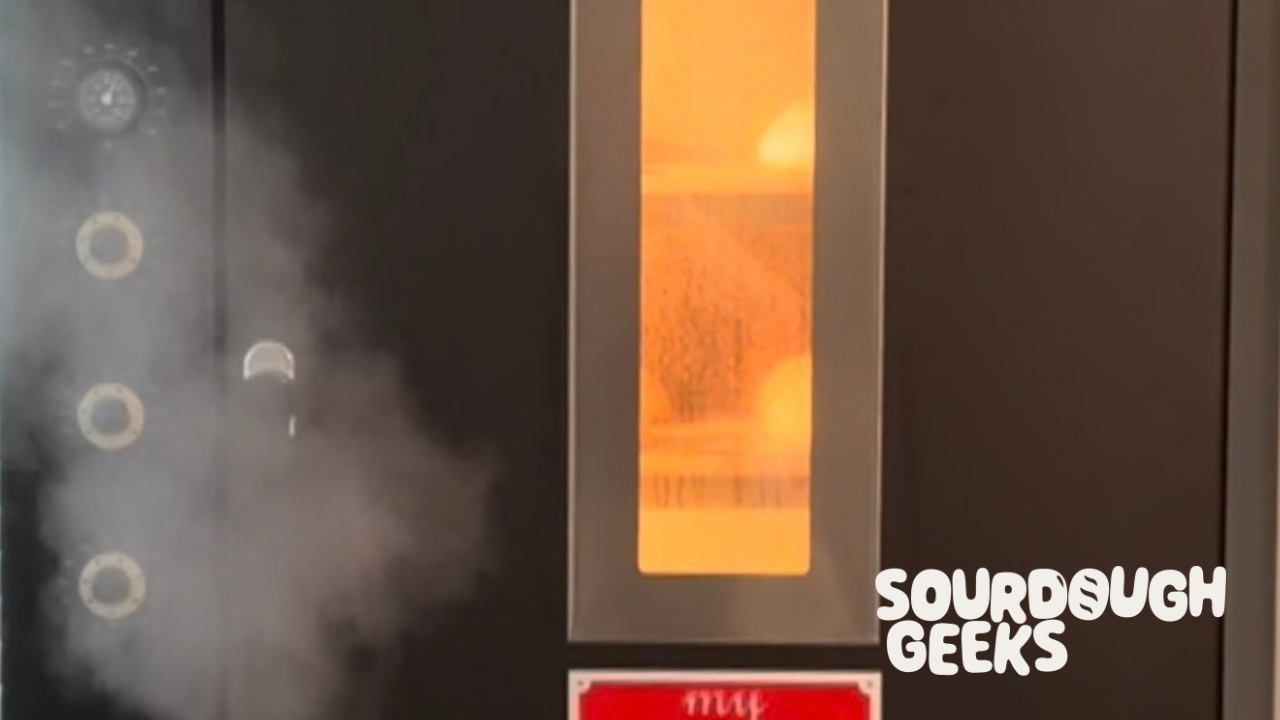
We posted a reel recently showing ‘clouds’ of steam coming out of my home bakery oven, right after loading, bake after beautiful bake. It didn't take long before someone asked the obvious question: if steam is escaping from the front, doesn't that mean it's a badly built oven? A waste of steam being produced?
It doesn't and it’s not. But answering that reasonable but misplaced concern properly means going back to what exactly steam is doing to your dough that’s important for a bakery-quality sourdough loaf - whether you’re baking in a regular home oven or a home bakery oven. That will also shed light on what it means if your oven is not releasing steam (there’s three possibilities and only one is good.) And of course, we’ll run through the best ways to introduce steam in a domestic oven set up and those to be avoided - even though you see it all over sourdough influencer feeds!
What Steam Does To Your Dough
An oven full of steam heats your dough faster than an oven full of dry air. Steam transfers heat into the dough far more efficiently than radiant heat alone, which is why the first few minutes in the oven matter so much.
Almost immediately, the steam condenses on the cold surface of your dough, forming a thin film of water that gelatinizes the starch at the surface. That starch gel is what buys you time. It's made up of amylose and amylopectin, and while it's wet, it keeps the dough's surface supple and stretchy instead of setting hard too early. That's what allows the loaf to keep expanding in the oven instead of tearing or capping out early.
Once the steam is vented and that gel dries out, it turns into a thin, continuous, glassy layer. That's your crisp crust. And as the surface keeps heating after the steam is gone, the starches in that layer break down further into dextrins and sugars. This drives the Maillard reaction and caramelization, the two reactions responsible for the deep, burnished color on a well-baked crust.
None of that happens well without a lot of steam early on, delivered quickly. Weak, slow steam gives you a duller, thicker crust and less oven spring. Steam under pressure moves fast enough to reach every corner of an oven chamber. That engulfing of your loaves is what gives you even color - by ensuring that thin film covers every dough surface.
Why The Steam Has To Get Out
Here's where the original question comes back in. If steam is that important, why let any of it escape?
Because an oven that's fully sealed doesn't stay a bread oven for long. Pump steam into a chamber with nowhere to vent it and the pressure inside keeps climbing. At that point it's behaving less like an oven and more like a pressure cooker. If the steam finds a way out on its own, it’s usually into the parts of the oven you really don't want moisture reaching - the wiring and electrical components behind the panels.
So an oven that produces plenty of steam has to be built to let the excess go somewhere safe too. Venting steam is the design working as intended. You see it in all good commercial bakery ovens, and it's the same principle at work with my home bakery oven, the My Forno: the design creates more steam than the dough strictly needs, and allows for the controlled release of any excess. An oven that never lets any steam escape at all is either not making enough steam for that to matter, or not venting the excess safely, and neither of those is something to want.
Getting Enough Steam If Your Oven Doesn't Give It To You
Most people reading this aren't baking in a purpose-built bread oven. You're working with a home oven. But it's the same physics whether you’re baking in that or one of the cottage or microbakery ovens a lot of our sourdough community use. Here's how that plays out depending on what you've got.
A Standard Home Oven
I want to be clear that this is about creating a bakery quality loaf of bread, akin to the kind that comes out of a powerful deck oven with steam injection: Glossy finish, thin and crisp crust, you know the one.
Most domestic ovens don't produce anything close to enough steam by relying on the hydration in the dough, so an additional water source greatly helps. This can either be in the form of misting with a spray bottle, or adding boiling water to a preheated pan, but the latter can pose a danger to both you and your oven.
There is a risk of scalding yourself, or shattering the glass in your oven door due to thermal shock, and you’ll almost certainly shorten the lifespan of any oven not designed to be filled with steam, due to the very reasons covered in the previous section. Steam finds its way into oven internals, creating a perfect environment for corrosion of components.
This is why the Dutch oven method is so popular; it mimics the very conditions of a bakery oven - thermal mass for conductive heat, and a covered chamber that will hold steam.
Baking inside a covered vessel, a Dutch oven or combo cooker: the lid traps the moisture already in your dough, creating a small sealed steam chamber around the loaf for the first fifteen to twenty minutes, then comes off to let the crust color.
If you're open baking on a stone or steel, steam is produced by preheating a heavy pan on the floor or lowest rack alongside your stone, and pouring a cup or so of already-boiling water over it. It flashes into steam on contact. This method is effective, but not one I would encourage over the long term.
Personally, when I use my home oven, my set up is simply a FibraMent stone* and a Brod & Taylor baking shell. The baking shell is ideal because it is lightweight and does not require pre-heating. I spritz the top of the loaf and the inside of the shell with a spray bottle. This largely contains the steam, and reduces the risk of burns or scalds.
A final note: Use water, not ice. Ice has to undergo two phase changes to become steam, and that takes a lot of energy. The thermal shock it induces has also been known to crack cast iron, and warp steel.
Cottage Bakery Ovens
With no built-in steam (Rofco, RackMaster)
These ovens hold heat exceptionally well, but they don't generate steam for you. You're supplying it entirely yourself, usually with a steam tray or pod filled with boiling water and preheated alongside the stone, or a pressurized garden sprayer used to mist the chamber heavily right after loading. Both work, and both come down to the same rule: get as much steam in as fast as possible at the start, then open the vents later to let it back out once your loaves have used what they need. The garden sprayer method, while effective, will reduce the thermal mass in the chamber, increasing recovery time.
With limited built-in steam (Simply Bread, Tom Chandley Pico)
These give you a head start, a built-in reservoir or tray that releases steam at the push of a button or a couple of seconds' burst when you load. It's genuinely useful, but on a full deck of loaves, that single dose often isn't enough to reach every loaf evenly.
The Rule, Whatever You're Baking In
However you get there, the target's the same: a lot of steam, delivered fast, at the start of the bake, with somewhere for the excess to go once your loaves have taken what they need. That's true whether you're loading a $15,000 deck oven or a $30 combo cooker.
If you're weighing up which oven might suit your setup, I put together this Home Bakery Oven Comparison Guide which was updated and expanded earlier this year to cover 8 options on the market. For the record, most of the time, I bake in my cottage bakery oven, a My Forno. As stated at the start of this article, it creates a lot of steam. It was designed by a third generation baker working with a third generation bread oven manufacturer specifically for the cottage and microbakery market, so it’s fair to say they know about baking and ovens. Having used all 4 of those ovens mentioned above, when I heard from an esteemed bakery consultant friend that the My Forno was the real deal, I immediately took steps to get the oven over to the US so I could buy one myself. The comparison guide explains what happened next, but long story short, that friend was right. I couldn’t be happier with my oven. And in a wonderfully serendipitous twist of fate, the My Forno is now distributed here in the US & Canada by a third generation bakery equipment supplier.
*Use GEEKS10 at checkout for 10% off if you decide to get one of these
🤓 LOOKING TO LEVEL UP & BAKE BETTER BREAD? ✅
Join Sourdough Geeks' Bakers Club and unlock the good stuff! Resources, events, and connection, all within a private space. It's right there waiting for you!
