SOURDOUGH CHALLAH RECIPE
I must have made thousands of yeasted Challah over the years, but making a sourdough version I was happy with is another story. Since there is oil instead of butter (no dairy), the enrichment is a very different proposition compared to every bread I’ve adapted before. Previous attempts with a sweet liquid starter had failed. This is now my preferred challah recipe.
Sourdough Challah: A Soft, Moist Recipe For Success
Not Yeasted, But Not At All Sour
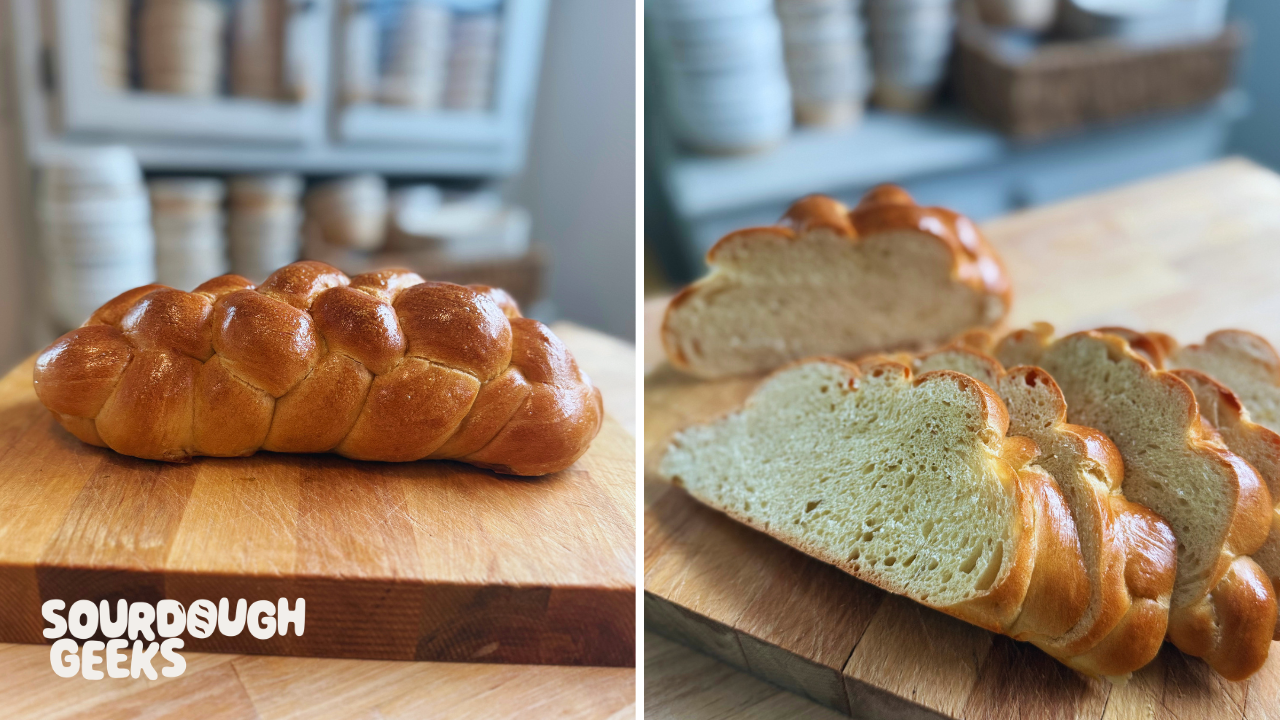
This time I tried the sweet stiff starter, challenging for sure, but a resounding success. The texture is like cloud-like cotton wool, and so moist - thanks to the EPS-producing nature* of the stiff starter method.
*See Notes for more about this.
Understanding Sweet Starters
Why Would You Use A Sweet Starter?
In sourdough baking, a sweet starter does not make your dough sweet, but it does eliminate sour notes that you probably don't want turning up in a your final recipe. Brioche, Maritozzi, Burger and Hot Dog buns are all great examples of when you wouldn't want sour bread. On top of that, you want those breads soft. Sweet starters deliver both qualities.
Notes On The Two Types of Sweet Starters: Stiff & Liquid
- Sweet Stiff Starter was first developed by Ian Lowe. Others - most notably Maaryasha Werdiger and Emily Hart - took his recipe and developed the Sweet Liquid Starter for other use cases, typically for breads with less enrichment.
- My own version of a Sweet Stiff Starter is available to Bakers Club members in the members-only Recipe Collection. Or you can find Ian Lowe's sweet stiff starter recipe here on the wonderful Wordloaf.
- Exopolysaccharides (EPS): I wrote briefly about the EPS-producing nature of the stiff starter method in this blog post.
Challenges of Baking With Sweet Starters
It's a days-long process that requires precision, control, and (I believe) an understanding of the science behind it, plus:
- Experience matters: Before you have a go at baking anything with a sweet starter - stiff or liquid, I'd recommend you get a few hundred lean sourdough loaves and enriched breads made with yeast under your belt first.
- A Strong, Healthy, Active Starter: Don't even entertain the idea of using a sweet stiff or sweet liquid starter if you keep your continuation sourdough starter in fridge most of the time, baking with it just a few times a year. Forget it. Support your local artisan baker instead.
Baking and Enjoying This Recipe
What Makes Sourdough Challah Special?
There are two things which make this recipe special for me:
- Texture & Flavor: The crumb is both softer and more moist than any yeasted challah I've either eaten or baked. Just lovely.
- Success After Abject Failure: You may nail it first time. I did not. And as with most things in life, the greater the effort, the sweeter the victory.
This recipe is designed to guide you through these challenges and, assuming you're ready, help you master the use of stiff starters. If you find yourself struggling, you might like to join our Bakers Club where we can communicate directly.
Tips for Success
- Ingredients Notes: I used King Arthur organic bread flour. For the oil, I used rice bran oil, but any neutral oil works — avocado, vegetable, or grapeseed.
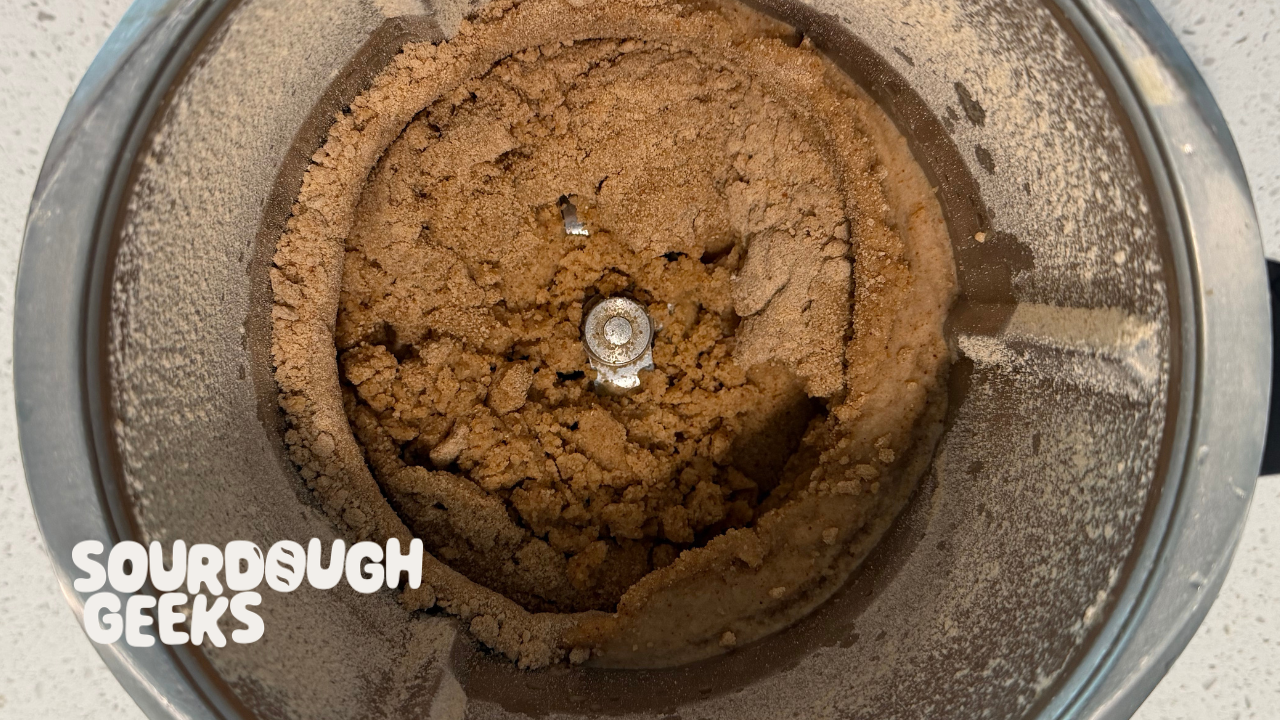
- Mixing Notes: This recipe and its 4 x 505g yield ensures you have enough dough in the mixer to mix everything effectively. I made it in the Ooni Halo Pro — you could also do it in a KitchenAid stand mixer, though I haven't tested it that way.
Shaping Sequence
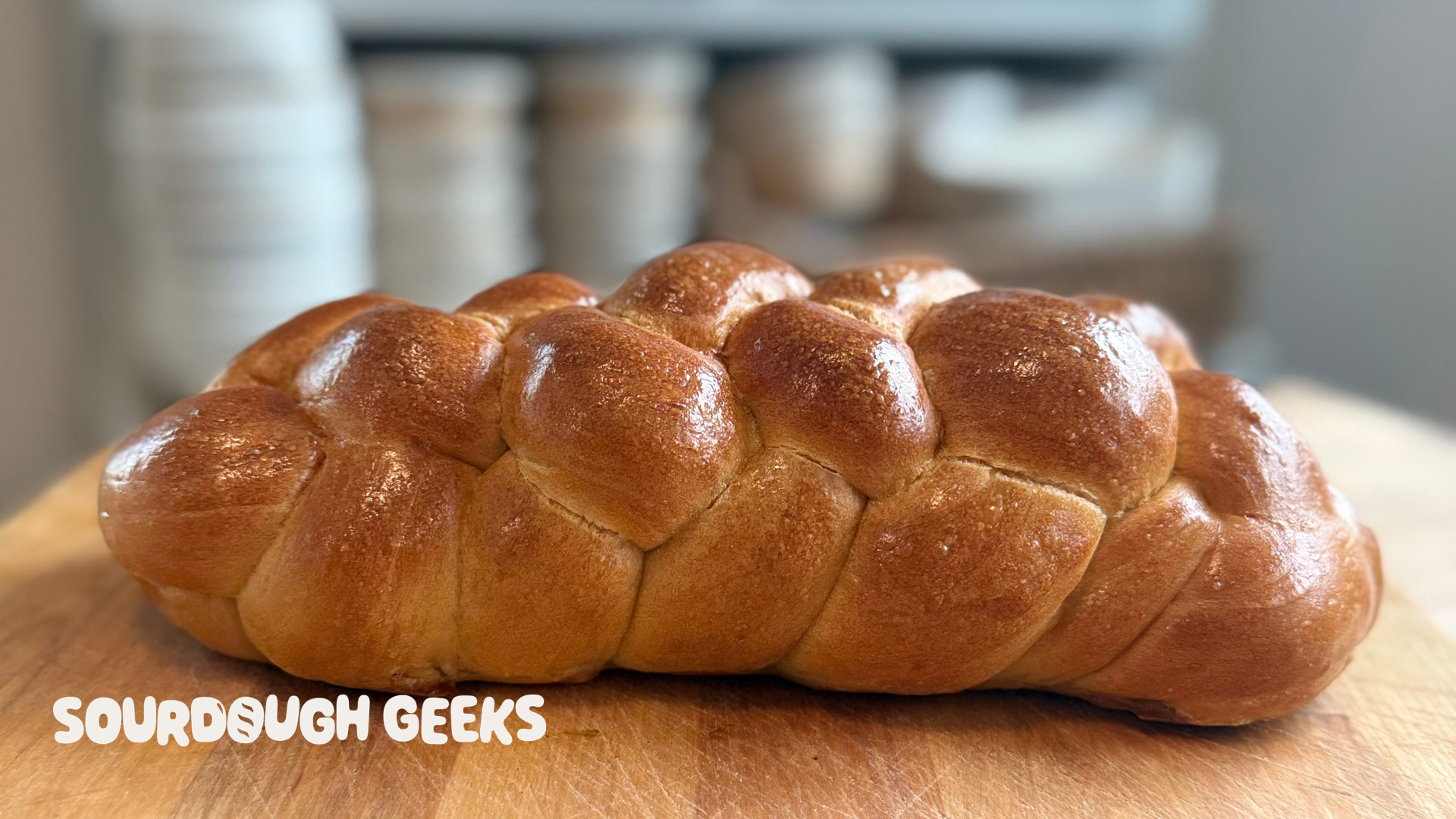
There are plenty of videos out there on various shaping styles. I favor a 6 strand shaping style, but feel free to do what makes you happy. Here is my best attempt at explaining my process, and you'll find a short video inside the recipe card too.
- Press and pinch your 6 strands together and fan them out so that the outer two strands sit at 80-90 degrees from the center line with the other two on each side around the 40-50 degree mark. This will leave the center line empty.
- Take the outer two strands and cross them over each other so they are now on opposite sides.
- Now follow a braiding sequence where you bring the outer strand on one side in to the center line, followed by the second strand from the other side to its opposite top position. Next do the opposite, ie. Take the outer strand on the opposite side from last time to the center, and the second strand from the opposite side from last time to the opposite side top position.
- In the video, James starts with the uppermost right strand, which he brings to the center. Next he takes the second strand down on the left and brings it to the top right position. Then he takes the top left strand and moves that to center, followed by the second strand down on the right which he crosses over the center to place at the top position on the left.
- Continue the sequence until you reach the end. When you get to the bottom, tuck the little ends under and pinch them together.
- You can secure the ends further by gently rolling the ends with your fingers to create a little point and tuck that under.
Pairing Ideas
Challah, whether yeasted or sourdough, has its own place on our tables. Custom, tradition and ceremony likely determine how you might eat this bread. I will say this though:
- Challah makes The Best French Toast!
YOU MIGHT ALSO LIKE...
COME MEET YOUR PEOPLE
Bread bakers at every level, away from the noise and bad advice, leveling up and growing together with James' professional guidance.
GET THE GOOD GEAR
Shop our fad-free store for a hand-picked collection of sourdough baking tools we stand behind. (There may be coupons.)
YOU, HIM & YOUR AGENDA
Bring your baking/bakery business questions, issues and problems... whatever's on your mind. Notes, and session recording sent within 24 hrs.
SIGN UP FOR OUR NEWSLETTER FOR FRESH FINDS EVERY WEEK!
We won't send spam. Unsubscribe at any time.