CORNBREAD SOURDOUGH
A naturally leavened loaf packed with scalded cornmeal, sweet corn, and the water the corn was cooked in, made for the first cool nights of autumn when cornbread starts sounding like a good idea again.
JUMP TO RECIPE
Close this page to return to the Members Recipes grid - or browse more recipes here: Members Only Recipes | All Recipes
Cornbread Season, Sourdough Style
Where This Loaf Came From
Once the evenings start cooling off here in Tennessee, my mind goes straight to cornbread, and I wanted a sourdough that carried that same sweet, toasty corn flavor without being cornbread at all. The answer was to put corn into the dough three different ways: sweet corn kernels for little pops of sweetness, a scalded cornmeal soaker for body and flavor, and the corn cooking water itself as all the hydration in the dough.
Triple Corn Inclusions
The method starts with simmering a couple of ears of sweet corn. I used my Thermomix, but a pot on the stovetop works just the same. That hot corn water does double duty; some of it goes straight over the cornmeal to scald and hydrate it, and the rest cools down to become the dough water. Scalding the cornmeal gelatinizes its starch, which helps the loaf hold onto moisture and keeps the crumb soft rather than gritty. If you want to go deeper on why that works, we cover it in Making Porridge Loaves & More on Gelatinized Starch.
Why Less Starter & A Little More Salt
Corn and cornmeal bring plenty of sugars and starches that break down into fermentable sugars quickly, so this dough can run away from you if you treat it like a plain country loaf. I dropped the starter to 15% so the bulk stays manageable even at a warm 80 to 82°F. I also nudged the salt up to 2.2%, a touch higher than I usually go, because with this much sweet corn and cornmeal in the dough I wanted to be sure everything was properly seasoned by the time it came out of the oven.
The Flour
The base is 75% King Arthur organic bread flour and 25% One Degree sprouted organic whole wheat. The bread flour gives the dough enough strength to carry a heavy load of inclusions, and the sprouted whole wheat adds a mellow, slightly sweet nuttiness that sits really nicely next to the corn.
Baking and Enjoying This Recipe
What Makes This Recipe Special?
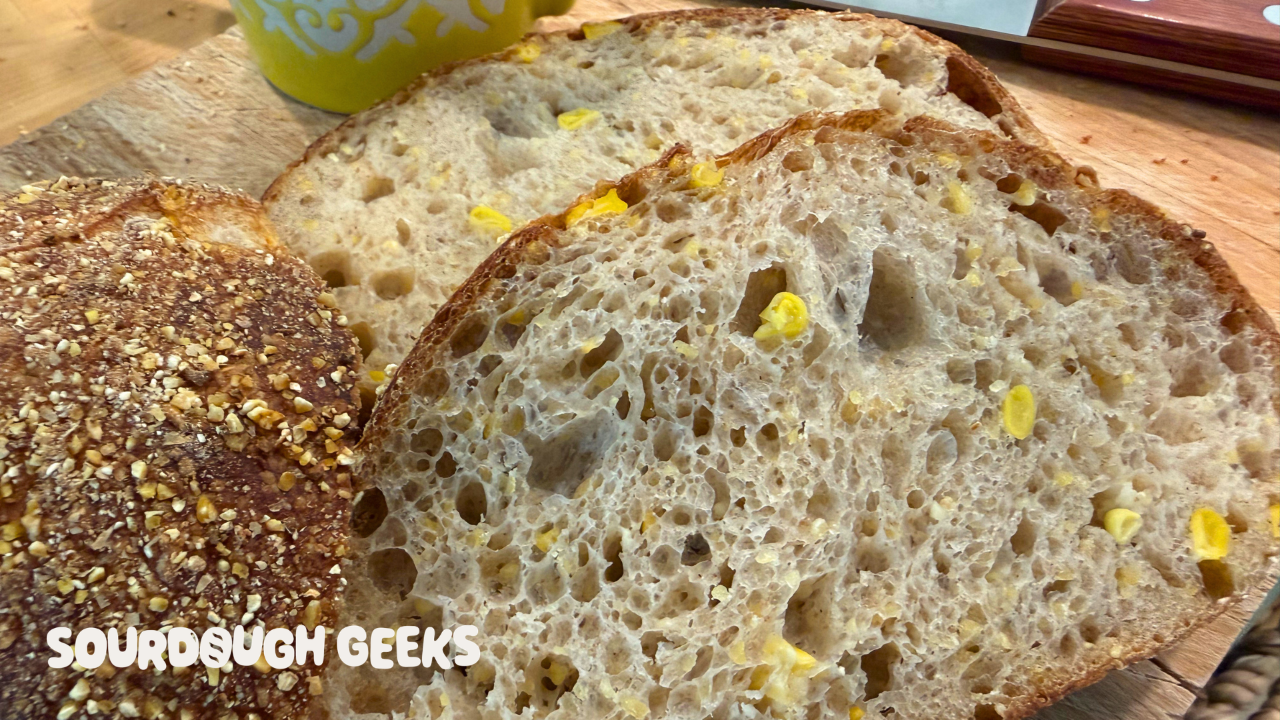
- The Best of Both Worlds: everything you love about cornbread, in a soft, moist sourdough loaf. Gently sweet, full of real corn flavor, and not a speck of grit.
- A Cornmeal Crust: rolling the shaped dough in fine cornmeal before it goes into the banneton gives the loaf a rustic, toasty finish.
- Bakery or Home Batch: the full recipe makes 4 loaves, and it halves cleanly with a single ear of corn for 2.
Tips for Success
- Make Enough Corn Water: you'll need 1,140g in total (240g for the soaker and 900g for the dough), so start with extra water in the pot to allow for evaporation while the corn simmers.
- Let Everything Cool: the soaker and the dough water both need to come down from simmering before they meet the starter, otherwise you'll cook your culture.
- Keep the Starter Low: resist the urge to add more starter. The corn sugars speed fermentation up on their own, and 15% is plenty at warm temperatures.
- Add the Inclusions Last: develop the gluten fully before the soaker and kernels go in, then mix on a lower speed only until they're evenly distributed.
- Read the Dough, Not the Clock: 5.5 hours is what bulk took for me at 80 to 82°F, so if your dough is cooler, expect it to take longer. Our guide to Reading and Judging Bulk Fermentation is a good companion here.
Serving & Pairing Ideas
- With a Bowl of Something Warm: chili, white bean and ham soup, or a pot of beans and greens.
- Toasted with Butter: brown butter and a drizzle of honey or sorghum is hard to beat.
- Southern Staples: pimento cheese, smoked brisket or pulled pork, and fried green tomatoes all feel right at home next to it.
- For the Holidays: cube day-old slices for a cornbread-style Thanksgiving stuffing, or toast them into croutons for a fall salad.
Storage & Reheating
- Store: keep the loaf cut-side down on a board or in a bread bag at room temperature for up to 3 days.
- Freeze: slice the cooled loaf, wrap it well, and freeze for up to 3 months.
- Reheat: toast slices straight from frozen, or warm a whole loaf at 350°F for 10 to 15 minutes to crisp the crust back up.
YOU MIGHT ALSO LIKE...

COME MEET YOUR PEOPLE
Bread bakers at every level, away from the noise and bad advice, leveling up and growing together with James' professional guidance.
GET THE GOOD GEAR
Shop our fad-free store for a hand-picked collection of sourdough baking tools we stand behind. (There may be coupons.)

YOU, HIM & YOUR AGENDA
Bring your baking/bakery business questions, issues and problems... whatever's on your mind. Notes, and session recording sent within 24 hrs.
SIGN UP FOR OUR NEWSLETTER FOR FRESH FINDS EVERY WEEK!
We won't send spam. Unsubscribe at any time.